About the College
The College of Arts and Sciences (COAS) at Umm Al Quwain University offers a Bachelor of Sociology program that provides students with a comprehensive education and specialized academic training.
The Sociology program prepares students for careers in the social and developmental sectors within both government and private organizations. Students study a range of sociology subfields, including Medical Sociology, Media Sociology, Family Sociology, and Development Sociology. In addition, they gain practical experience through internships and field training that extend over two years.
The college also offers General Education courses for all colleges at Umm Al Quwain University, with a focus on languages, digital transformation, innovation, critical thinking, and sustainability. These courses are designed to equip students with essential skills and knowledge that enhance their academic and professional readiness while providing them with a global perspective that supports success across various disciplines.
Dean’s Speech
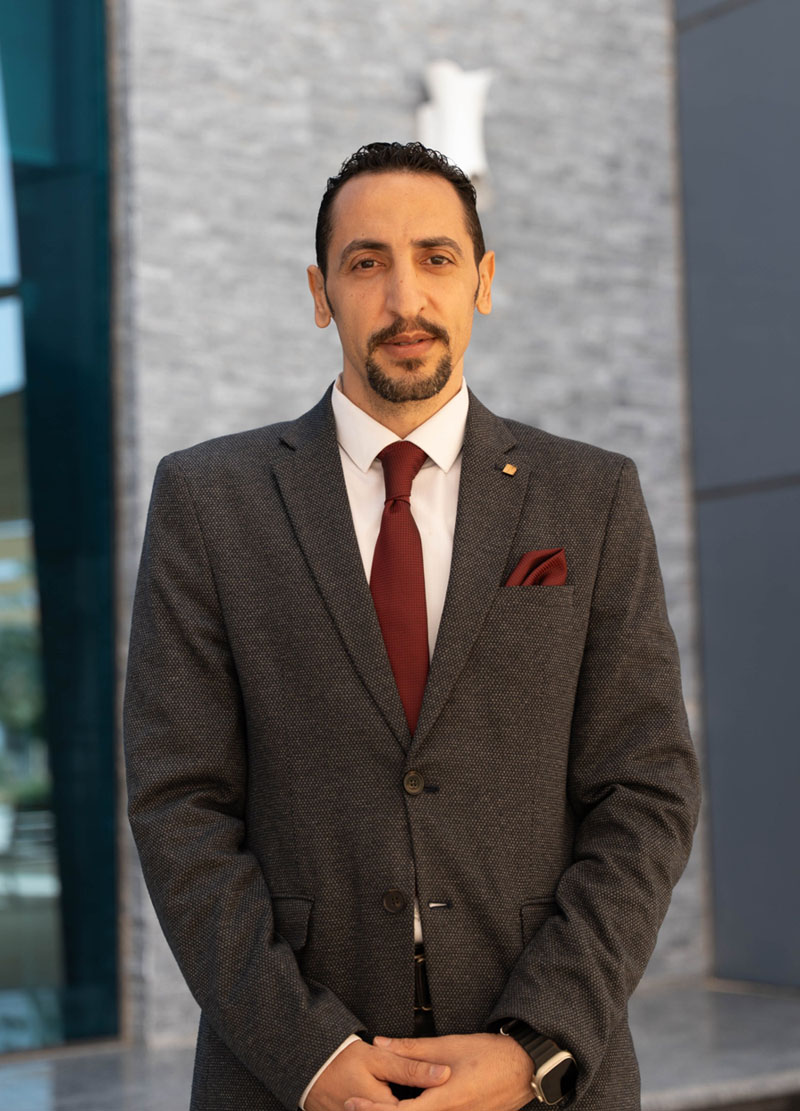
It is my pleasure to welcome you to the College of Arts and Sciences, where we believe that university education is not merely about acquiring knowledge, but rather a holistic journey that develops individuals, enhances their capabilities, broadens their horizons, and prepares them to contribute effectively to their communities and shape their futures.
The College is committed to providing a supportive and stimulating academic environment that brings together quality education, academic excellence, scientific research, and community engagement. We strive to equip our students with the knowledge, skills, and competencies they need to think critically and creatively, respond effectively to rapid change, and make informed use of technological advancements, thereby enhancing their ability to compete and excel in the labour market and in all areas of life.
The College of Arts and Sciences is distinguished by its diverse disciplines in the humanities and social sciences, as well as its role in delivering general education requirements across the University’s colleges. We regard this diversity as a source of strength and a valuable opportunity to promote knowledge integration, interdisciplinary learning, and collaboration across various fields. We also believe that the study of people, society, culture, and behaviour is inseparable from the challenges facing our world today; rather, it provides an essential foundation for understanding these challenges and contributing to scientific, humane, and sustainable solutions.
I believe that the strength of the College is measured not only by the programmes and courses it offers, but also by its ability to make a meaningful difference in the lives of its students, the wider community, and the development journey of the United Arab Emirates. Accordingly, we will continue to develop our academic programmes, enhance the quality of teaching and learning, support scientific research and innovation, and keep pace with digital transformation and emerging technologies in alignment with the aspirations of Umm Al Quwain University and the UAE’s future priorities.
We also seek to expand the College’s partnerships with educational, research, and community institutions at the local, regional, and international levels, while transforming knowledge and scientific research into initiatives and practices that deliver tangible impact. Particular attention will be given to initiatives that strengthen the College’s role in community service, support sustainable development, and respond to contemporary social, cultural, and humanitarian needs and challenges.
Students will remain at the heart of everything we do. We are therefore committed to creating a university environment in which every student feels supported and valued, and has access to opportunities that enable them to discover their potential, develop their talents, participate in academic and community activities and initiatives, and build a well-rounded character that combines knowledge, skills, values, and responsibility.
Throughout this journey, the success of the College remains a shared responsibility. I invite our faculty members, staff, students, alumni, and community partners to continue working together as one team, foster a culture of collaboration and contribution, and help build an academic community founded on excellence, innovation, integrity, responsibility, and service to society.
Our ambition extends beyond developing an academically distinguished college. We aspire to build a college with a strong and influential academic and community identity one that serves as a centre for knowledge, research, and innovation; an active partner in community service; and an inclusive space for dialogue, learning, reflection, and shaping the future.
Together, we will continue to build a brighter future for the College of Arts and Sciences a future in which education is a force for change, knowledge is a pathway to progress, and people remain at the heart of development.
Dr. Hany Hegazy
Acting Dean - College of Arts and Sciences
Our Faculty
Specializations
-
Bachelor of Arts in Sociology
The program works on preparing specialized and qualified cadres in social and developmental work in various government and private institutions. It provides students with the scientific and applied foundations of Sociology and its various branches, such as Medical Sociology, Media Sociology, Social Statistics, Family Sociology, Development Sociology, Future Sociology, Social Planning, and Women’s Sociology. It also provides students with the necessary knowledge that qualifies them to acquire skills in dealing with people of determination and social problems, as well as providing them with practical and applied knowledge that students acquire through internship and field training over two years in related institutions.
-
Bachelor of English Language and Translation (On hold)
It is accredited by the Ministry of Education in the United Arab Emirates. The program aims to raise the level of students in the four language skills of reading, writing, speaking and listening as well as their ability in translation keeping in mind the ever increasing demand for professionally qualified and trained professionals to fulfill the region demands in translation and other English language demanding fields. The English Language and Translation Program offers courses that have been developed to help students achieve high levels of communicative competence in English, learn about major theories and trends in linguistics, and apply linguistic principles and findings in areas such as phonology, morphology, and discourse analysis. The program also provides practical training in translating from English into Arabic and vice versa for various texts. Graduates can look forward to career options in areas such as translation and education, and they can also work as authors and editors. Engaging in these rich academic experiences will impact, in positive ways, the lives of students.
Credit Hours
-
Bachelor of Arts in Sociology
132 Hours Divided over 4 Years.
-
Bachelor of English Language and Translation (On hold)
132 Hours Divided over 4 Years.
Program language
-
The language of instruction for the Bachelor of Arts in Sociology is Arabic.
-
The language of instruction for the Bachelor of Arts in English Language and Translation is English.
Career Opportunities
|
Fields
|
Location
|
-
Social counsellor
-
Social worker
|
Schools
|
-
Behaviour therapist
-
Specialist for the care of prisoners and their families
-
Social counsellor
|
Correctional and Penal and institutions
|
-
Local Police
-
Child protection specialist
|
Community Police
|
-
Family Court (Family Guidance and Counselling Specialist)
|
Courts
|
-
People of determination care specialist
-
Elderly care specialist
|
Ministry of Community Development
|
-
Specialist in treating and rehabilitating addicts, such as (Awnak Center)
-
Family cohesion specialist
-
Social research specialist
|
Community Development Authority- Dubai and its specialized centres
|
-
Community care specialist
-
social development
|
Voluntary and charitable private associations
|
Admission Requirements for the Bachelor Arts in Sociology
Exemption:
-
Pass UAQU Entrance Exam with minmum score 60.
-
Or any other accepted equivalent proficiency test by CAA
-
Or score equal to or more than 70 in a high school English subject.
-
Or Pass English Remedial Course conducts by university.
-
Or average high school score more than or equal 80.Or Pass English Remedial Course conducted online or face-to-face by university.
-
Or students who have studied educational curricula not affiliated with the Ministry of Education are not required to prove English proficiency test if the curriculum is taught in English.
General Terms:
-
For missing proficiency tests the applicants can be conditionally accepted for one academic year.
-
These proficiency criteria will be applied for both new and conditional continued students.
-
Applicants whose high school average is less than 60% may be accepted after register/Pass in 3 remedial courses English, Math and Arabic conducted by UAQU.
Program Learning Outcomes
Bachelor of Arts in Sociology
After successfully completing this program, the graduate will be able to:
Knowledge:
|
A1
|
Understand the different conditions that met for the emergence of sociology and its different fields and branches.
|
|
A2
|
Recognize the relationship between sociology and its interaction relationships with other complementary social sciences.
|
|
A3
|
Understand the methodology of sociology and the theoretical background.
|
Skills:
|
B1
|
Analyze patterns of human social behavior.
|
|
B2
|
Employ social strategies and policies with more creative and constructive thinking.
|
|
B3
|
Apply preventive and curative intervention plans and programs to confront individual and group problems.
|
Competencies:
|
Autonomy & Responsibility (C1)
|
|
C1.1
|
Compose theoretical and field social research and analyzing its data, with efficient use of statistical data analysis software, and global databases.
|
|
C1.2
|
Evaluate the tools of the present, to deal with problems and unfavorable circumstances and manage the crisis to enhance the principles of sustainability.
|
|
C1.3
|
Appraise responsibility for work and leadership in social enterprises.
|
|
Role in Context (C2)
|
|
C2.1
|
Value team work and adhere to the institutional system.
|
|
C2.2
|
Appraise criticism and self-learning to keep pace with social and cultural changes.
|
|
Self-Development (C3)
|
|
C3
|
Assess own learning and developing the interpersonal skills to function effectively in a diverse cross, functional environment in accordance with the sociology ethics.
|
English Language and Translation (On hold)
Program Learning Outcomes according to the Qualifications Framework in the United Arab Emirates (QF Emirates)
After successfully completing this program, the graduate will be able to:
Knowledge:
|
A1
1.1
|
Demonstrate understanding of social, cognitive, and personal variables from research and experience in second language acquisition (SLA).
|
|
A2
2.1
|
Show understanding the major theories and trends in linguistics, and the application of linguistic principles and findings to such areas as phonetics, phonology, lexis, morphology, discourse analysis, contrastive analysis and stylistics.
|
|
A3
2.2
|
Recognise and make distinctions between alternative analyses of empirical data at one or more levels of linguistic analysis.
|
|
A4
3.1
|
Illustrate knowledge and understanding of literary classics, canon, genres, as well as interdisciplinary approaches to the study of literature.
|
|
A5
4.1
|
Show knowledge and understanding of the different translation genres and styles.
|
|
A6
5.2
|
Demonstrate understanding the skills and competencies utilized in problem solving and decision making that can be applied in a variety of English language and translation situations.
|
Skills:
|
B1
1.2
|
Collect, synthesise and utilise material from a variety of sources in both oral and written contexts.
|
|
B2
2.3
|
Describe and apply core analytical concepts used in linguistic analysis, namely, phonetics, phonology, morphology, syntax, semantics.
|
|
B3
4.2
|
Interpret and analyze a text using different approaches from literary, rhetorical and/or linguistic theories.
|
English Language and Translation Program Objectives and Program Learning Outcomes Matrix
|
To raise the competency level in the four language skills of reading, writing, speaking and listening, achieved through the specific language courses required to be complete during the first two years of study.
|
A1
1.1
|
Demonstrate understanding of social, cognitive, and personal variables from research and experience in second language acquisition (SLA).
|
|
To develop a broader understanding of the language system and subsidiary language disciplines in language study to be open to multiple cultures, and be well able to interact with different cultures, by developing their communicative, grammatical and pragmatic competences through e.g. Linguistics, Morphology, Syntax, etc.
|
A2
2.1
|
Show understanding the major theories and trends in linguistics, and the application of linguistic principles and findings to such areas as phonetics, phonology, lexis, morphology, discourse analysis, contrastive analysis and stylistics.
|
|
To develop a broader understanding of the language system and subsidiary language disciplines in language study to be open to multiple cultures, and be well able to interact with different cultures, by developing their communicative, grammatical and pragmatic competences through e.g. Linguistics, Morphology, Syntax, etc.
|
A3
2.2
|
Recognise and make distinctions between alternative analyses of empirical data at one or more levels of linguistic analysis.
|
|
To be knowledgeable of world literary classics, canon, genres, as well as interdisciplinary approaches to the study of literature.
|
A4
3.1
|
Illustrate knowledge and understanding of literary classics, canon, genres, as well as interdisciplinary approaches to the study of literature.
|
|
To be able to translate different texts, be they literary or non-literary mastering techniques suitable to translate different genres and styles and understanding communication as a social and psychological process in terms of the concepts, levels, channels and effects.
|
A5
4.1
|
Show knowledge and understanding of the different translation genres and styles.
|
|
To understand the skills and competencies utilized in problem solving and decision making that can be applied in a variety of English language and translation situations.
|
A6
5.2
|
Demonstrate understanding the skills and competencies utilized in problem solving and decision making that can be applied in a variety of English language and translation situations.
|
|
|
|
To raise the competency level in the four language skills of reading, writing, speaking and listening, achieved through the specific language courses required to be complete during the first two years of study.
|
B1
1.2
|
Collect, synthesise and utilise material from a variety of sources in both oral and written contexts.
|
|
To develop a broader understanding of the language system and subsidiary language disciplines in language study to be open to multiple cultures, and be well able to interact with different cultures, by developing their communicative, grammatical and pragmatic competences through e.g. Linguistics, Morphology, Syntax, etc.
|
B2
2.3
|
Describe and apply core analytical concepts used in linguistic analysis, namely, phonetics, phonology, morphology, syntax, semantics.
|
|
To be able to translate different texts, be they literary or non-literary mastering techniques suitable to translate different genres and styles and understanding communication as a social and psychological process in terms of the concepts, levels, channels and effects.
|
B3
4.2
|
Interpret and analyze a text using different approaches from literary, rhetorical and/or linguistic theories.
|
|
|
To raise the competency level in the four language skills of reading, writing, speaking and listening, achieved through the specific language courses required to be complete during the first two years of study.
|
Autonomy and Responsibility
|
C1
1.3
|
Communicate fluently and accurately in spoken and written English using appropriate English vocabulary, grammar, and discourse.
|
|
To be able to translate different texts, be they literary or non-literary mastering techniques suitable to translate different genres and styles and understanding communication as a social and psychological process in terms of the concepts, levels, channels and effects.
|
C2
4.4
|
Translate different texts, be they literary or scientific.
|
|
To be able to translate different texts, be they literary or non-literary mastering techniques suitable to translate different genres and styles and understanding communication as a social and psychological process in terms of the concepts, levels, channels and effects.
|
Role in Context
|
C3
4.3
|
Collaborate and work co-operatively with interpreting group members and/or others.
|
|
To understand the skills and competencies utilized in problem solving and decision making that can be applied in a variety of English language and translation situations.
|
C4
5.1
|
Utilize analytical problem-solving skills and techniques in the resolution of various English language and translation scenarios within the milieu of organizational and institutional requirements.
|
|
To be knowledgeable of world literary classics, canon, genres, as well as interdisciplinary approaches to the study of literature.
|
Self-Development
|
C5
3.2
|
Produce critical interpretations and analysis of literary texts with attention to language.
|
Study Plan
To Download Study Plan Sociology Programe click here
To Download Study Plan English Language and Translation Program (On hold) click here
Program Structure
Sociology Program
Program Requirement
|
No of Courses
|
Credit Hours
|
|
GED Compulsory
|
8
|
24
|
|
GED Free Elective
|
2
|
6
|
|
Total GED Courses
|
10
|
30
|
|
Program Compulsory
|
31
|
93
|
|
Program Free Elective
|
3
|
9
|
|
Total Sociology Courses
|
34
|
102
|
|
Program Total Credits
|
44
|
132
|
>
The University Requirements:
University Requirements are 30 credits out of which 24 credits Compulsory Courses and 6 are electives. The compulsory 24 credit hours consists of: 2 English communications courses, 1 mathematics course, 1 Islamic culture, UAE Society and Innovation and Creativity, and Arabic as well as a computer literacy course. The remaining 6 credits include one course in Natural or physical science and one course in behavioral sciences.
Course Code
|
Course Title
|
Pre-requisite
|
Cr. H
|
English language, mathematics and use of computers
|
|
ENG
|
101
|
Composition and Modern English I
|
None
|
3
|
|
ENG
|
102
|
Composition and Modern English II
|
ENG 101
|
3
|
|
MTH
|
100
|
College Algebra
|
None
|
3
|
|
CIT
|
100
|
Computer Concepts and Applications
|
None
|
3
|
Islamic studies, history, or culture
|
|
GED
|
100
|
Islamic Studies
|
None
|
3
|
Humanities or arts
|
|
GED
|
110
|
UAE Society
|
None
|
3
|
|
IEC
|
111
|
Innovation, Creativity & Entrepreneurship
|
None
|
3
|
Arabic, or other languages
|
|
GED
|
120
|
Communication Skills in Arabic
|
None
|
3
|
|
Natural or physical sciences requirement: student will select one course (3 credits) from the following
|
|
GED
|
130
|
Introduction to GIS
|
None
|
3
|
|
GED
|
140
|
Conceptual Physics
|
None
|
3
|
|
Social or behavioral Sciences requirement: student will select one course (3 credits) from the following
|
|
GED
|
150
|
Critical Thinking
|
None
|
3
|
|
GED
|
160
|
Psychology in Everyday Life
|
None
|
3
|
|
GED
|
180
|
Human Behavior and Socialization
|
None
|
3
|
|
Total
|
30
|
Four years plan
|
Year
|
Semester
|
Course Code
|
Course Title
|
Pre-requisite
|
|
First Year
|
First
|
SOC 101
|
مدخل إلى علم الاجتماع
|
Introduction to Sociology
|
-
|
|
SOC 102
|
علم الاجتماع التطبيقي
|
Applied Sociology
|
-
|
|
SOC 103
|
المجتمع الإماراتي المعاصر
|
Contemporary Emirati society
|
-
|
|
SOC 104
|
الأنثروبولوجيا (علم الإنسان)
|
Social Anthropology
|
-
|
|
ENG 101
|
مهارات الاتصال باللغة الانجليزية (1)
|
Compositions and Modern English I
|
-
|
|
CIT 100
|
المدخل إلى تقنية المعلومات
|
Computer Concepts and Applications
|
-
|
|
|
متطلب جامعة أختياري
|
GED Free Elective
|
|
|
Second
|
SOC 105
|
علم الاجتماع الطبي
|
Medical Sociology
|
-
|
|
SOC 106
|
علم اجتماع الإعلام
|
Sociology of Media
|
-
|
|
SOC 107
|
الإحصاء الاجتماعي
|
Social Statistics
|
-
|
|
GED 120
|
مهارات الاتصال باللغة العربية
|
Communication Skills in Arabic
|
None
|
|
ENG 102
|
مهارات الاتصال باللغة الانجليزية (2)
|
Compositions and Modern English II
|
ENG 101
|
|
-
|
متطلب برنامج اختياري
|
Program Free Elective Requirement
|
-
|
|
Second Year
|
First
|
SOC 201
|
مناهج البحث الاجتماعي
|
Social Research Methods
|
SOC 102
|
|
SOC 202
|
علم اجتماع العمل
|
Sociology of
Work
|
-
|
|
SOC 203
|
التشريعات الاجتماعية
|
Social Legislations
|
SOC 103
|
|
SOC 204
|
علم الاجتماع الأسري
|
Sociology of the Family
|
-
|
|
MTH 100
|
الرياضيات
|
College Algebra
|
-
|
|
Second
|
SOC 205
|
قضايا العولمة
|
Issues of globalization
|
SOC 106
|
|
SOC 206
|
علم اجتماع المستقبل
|
Sociology of the future
|
-
|
|
SOC 207
|
علم الاجتماع الصناعي
|
Industrial Sociology
|
-
|
|
-
|
متطلب جامعة اختياري
|
GED Free Elective
|
-
|
|
-
|
متطلب برنامج اختياري
|
Program Free Elective Requirement
|
-
|
|
Third Year
|
First
|
SOC 301
|
النظريات الاجتماعية الكلاسيكية
|
Classic Social Theories
|
SOC 101
|
|
SOC 302
|
علم الاجتماع الحضري
|
Urban Sociology
|
SOC 106
|
|
SOC 303
|
تصميم وتنفيذ البحوث الاجتماعية
|
Design and Implementation of Social Research
|
SOC 107, SOC 201
|
|
SOC 304
|
علم اجتماع السكان
|
Sociology of Population
|
SOC 107
|
|
IEC 111
|
الإبتكار وريادة الأعمال
|
Innovation Creativity and Entrepreneurship
|
-
|
|
|
متطلب برنامج اختياري
|
Program Free Elective Requirement
|
|
|
Second
|
SOC 305
|
علم اجتماع التنظيم
|
Sociology of Organization
|
SOC 207
|
|
SOC 306
|
علم اجتماع التنمية
|
Development Sociology
|
-
|
|
SOC 307
|
علم اجتماع الجريمة
|
Criminal Sociology
|
SOC 203
|
|
SOC 308
|
التدريب الميداني 1
|
Internship 1
|
60 credits and to be in year three
|
|
SOC 309
|
النظريات الاجتماعية المعاصرة
|
Contemporary Social Theories
|
SOC 101
|
|
GED 110
|
القانون والمجتمع
|
UAE Society
|
-
|
|
Fourth Year
|
First
|
SOC 401
|
التغير الاجتماعي والثقافي
|
Social and Culture Change
|
SOC 103
|
|
SOC 402
|
علم اجتماع السياحة والترفيه
|
Sociology of Tourism and Leisure
|
SOC 302, SOC 103
|
|
SOC 403
|
نصوص اجتماعية باللغة الانجليزية
|
Sociology texts in English
|
ENG 102
|
|
SOC 404
|
التدريب الميداني2
|
Internship 2
|
SOC 308 + 90 credits & to be year four
|
|
GED 100
|
الثقافة الإسلامية
|
Islamic Studies
|
-
|
|
Second
|
SOC 405
|
المشكلات الاجتماعية
|
Social Problems
|
-
|
|
SOC 406
|
التخطيط الاجتماعي
|
Social Planning
|
SOC 206,
SOC 306
|
|
SOC 410
|
بحث التخرج
|
Graduation research
|
SOC 404 + 105 credits
|
|
SOC 411
|
علم اجتماع المعرفة
|
Sociology of knowledge
|
-
|
English Language and Translation (On hold)
3B.i. Proposed Course Sequence of Study
|
Semester
|
Code
|
|
<td style="width:281px;height:24px; background-color:#F6F9FF;" "="">
Subject Title
|
Type
|
Prerequisite
|
Cr
|
|
Semester 1
(Level 1)
|
CIT
|
100
|
Computer Concepts and Applications
|
UR/C
|
|
3
|
|
ENG
|
101
|
Composition and Modern English I
|
UR/C
|
|
3
|
|
GED
|
100
|
Islamic Studies
|
UR/C
|
|
3
|
|
GED
|
110
|
UAE Society
|
UR/C
|
|
3
|
|
MTH
|
100
|
College Algebra
|
UR/C
|
|
3
|
|
|
|
|
|
|
15
|
|
Semester 2
(Level 2)
|
ENG
|
102
|
Composition and Modern English II
|
UR/C
|
ENG 101
|
3
|
|
ENG
|
112
|
Reading Skills
|
CRR
|
ENG 101
|
3
|
|
ENG
|
114
|
English Grammar
|
CRR
|
ENG 101
|
|
|
GED
|
120
|
Communications Skills in Arabic
|
UR/C
|
|
3
|
|
|
|
Natural Science
|
UR/E
|
|
3
|
|
|
|
|
|
|
15
|
|
Semester 3
(Level 3)
|
ENG
|
202
|
Business Communication
|
CRR
|
ENG 102
|
3
|
|
ENG
|
205
|
Advanced English Writing Skills
|
CRR
|
ENG 102
|
3
|
|
ENG
|
210
|
Speech Communication
|
CRR
|
ENG 102
|
3
|
|
ENG
|
220
|
Literature in the Modern World
|
CRR
|
ENG 102
|
3
|
|
ENG
|
225
|
Language and Linguistics
|
CRR
|
ENG 102
|
3
|
|
|
|
Social or behavioral Sciences (1)
|
UR/E
|
|
3
|
|
|
|
|
|
|
18
|
|
Semester 4
(Level 4)
|
ENG
|
231
|
Syntax I
|
CRR
|
ENG 225
|
3
|
|
ENG
|
232
|
Phonetics and Phonology
|
CRR
|
ENG 102, 112
|
3
|
|
ENG
|
233
|
Morphology & Lexical Studies
|
CRR
|
ENG 225
|
3
|
|
ENG
|
234
|
Discourse Analysis
|
CRR
|
ENG 114
|
3
|
|
|
|
Free Elective (1)
|
FRE
|
|
3
|
|
|
|
|
|
|
15
|
|
Semester 5
(Level 5)
|
ENG
|
325
|
Sociolinguistics
|
CRR
|
ENG 225
|
3
|
|
ENG
|
335
|
Advanced English Vocabulary
|
CRR
|
ENG 102
|
3
|
|
ENG
|
340
|
English-Arabic Translation
|
CNR
|
ENG 102,GED120
|
3
|
|
ENG
|
333
|
Error Analysis
|
CRR
|
ENG 114
|
3
|
|
ENG
|
|
Major Elective (1)
|
CRE
|
|
3
|
|
|
|
|
|
|
15
|
|
Semester 6
(Level 6)
|
ENG
|
341
|
Arabic- English Translation
|
CNR
|
ENG 340
|
3
|
|
ENG
|
342
|
Translation Theory and Practice
|
CNR
|
ENG 340
|
3
|
|
ENG
|
344
|
Introduction to Consecutive Interpreting
|
CNR
|
ENG 340
|
3
|
|
ENG
|
|
Major Elective (2)
|
CRE
|
|
3
|
|
|
|
Social or behavioral Sciences (2)
|
UR/E
|
|
3
|
|
|
|
|
|
|
15
|
|
Semester 7
(Level 7)
|
ENG
|
434
|
Contrastive Linguistics
|
CRR
|
ENG 225
|
3
|
|
ENG
|
471
|
Consecutive Interpreting I
|
CNR
|
ENG 344
|
3
|
|
ENG
|
490
|
Practicum/Training/Internship
|
CNR
|
|
3
|
|
ENG
|
|
Major Elective (3)
|
CRE
|
|
3
|
|
|
|
Free Elective (2)
|
FRE
|
|
3
|
|
|
|
|
|
|
15
|
|
Semester 8
(Level 8)
|
ENG
|
442
|
Multimedia Translation
|
CNR
|
ENG 340
|
3
|
|
ENG
|
|
Major Elective (4)
|
CRE
|
|
3
|
|
ENG
|
|
Major Elective (5)
|
CRE
|
|
3
|
|
|
|
Free Elective (3)
|
FRE
|
|
3
|
|
|
|
Free Elective (4)
|
FRE
|
|
3
|
|
|
|
|
|
|
15
|
Abbreviations: UR/C: University Requirements Compulsory Courses, UR/E: University Requirements Elective Courses, CRR: Core Requirement, CRE: Core Requirement Elective; CNR: Concentration Requirements; FRE: Free Elective
Course Description
To download Course Structure - Sociology click here
To download Course Structure - English Language and Translation (On hold) click here